Beta-people
A brilliant mind, housed in a body that cannot grasp.

In the Vorkosigan Saga, individuals from the planet Beta Colony are sometimes referred to as 'Betans,' but the term 'Beta' is not slang for a disability. The condition affecting Miles Vorkosigan is a severe fine-motor impairment caused by prenatal teratogenic damage, not a general category. His cognition, speech, emotion, and intellect are entirely intact; what is impaired is the fine-motor bridge between thought and action. Miles can conceive a symphony, debate philosophy, and feel every human emotion, yet he cannot pick up a pen, turn a doorknob, or feed himself without assistance; he retains no functional use of his hands for such tasks. The condition carries enormous narrative and social weight across Lois McMaster Bujold's novels, most viscerally in Miles Vorkosigan, the heir to one of Barrayar's most powerful military houses, who was born with severe physical disabilities rather than the perfect body his family and culture demanded. His existence forces a rigid, militaristic society to confront what it means to be a person when the body it prizes is absent.
- Nature
- Acquired prenatal injury (teratogenic damage from chemical attack); not genetic or heritable
- Cognitive ability
- Full; no impairment to intellect, speech, or emotion
- Social status (Barrayar)
- Stigmatized; often subject to pity or marginalization, but no systematic policy of institutionalization is described
- Notable Beta
- Miles Vorkosigan
- First appears
- The Warrior's Apprentice (1986), though Miles's condition is established from the start of his first published appearance
- Permanence
- Permanent; no in-universe cure established
Lore & Background
In the Bujold universe, the term 'Beta' is not a slang term for a disability; it refers to people from Beta Colony. The condition affecting Miles is not merely medical but cultural, particularly on Barrayar, where martial competence and physical self-sufficiency are woven into the social hierarchy. Individuals with this condition are recognized as fully human, yet the society that built its identity around sword-arms and command presence treats them as a perpetual dependency. In practice, they face stigma and pity, but contrary to some accounts, they are not systematically removed from their families or placed in custodial institutions; Miles, for instance, was raised at home by his parents. They are spoken about in tones of pity or administrative convenience, rarely as full participants in civic life. The condition is not heritable—it is an acquired prenatal injury—which means families do not face the specter of passing it on, but must still grapple with a society that has already decided what a disabled child is worth. For a house like the Vorkosigans, where the heir is expected to command fleets and stand in council, a physically disabled child is not merely a disappointment but a structural crisis. The political and emotional fallout of Miles's condition is a significant factor in the early saga, but the central tension of The Warrior's Apprentice is his fraudulent assumption of command and the Dendarii plot. Yet the saga repeatedly undermines the assumption that a person with this condition is lesser. Such characters in the novels are sharp, funny, angry, loving, and strategically brilliant. Their limitation is physical and narrow; their interiority is as vast as any able-bodied person's. The narrative insists, again and again, that the measure of a person is not the grip in their hand.
In Their Own Story
The corridor smelled of antiseptic and old carpet. Koudelka's hands trembled as she set the tray down—soup, bread, a glass of water—and the boy at the window didn't turn. He was nineteen, maybe twenty, with ink-stained fingers that could not, would not, close around a pen. He had been trying to write a letter to his sister for three weeks. The letters lived only in his head, in his mouth, in the slurred, frustrated sounds he made when the caretaker brought him a fresh sheet and a stylus he could not hold. "Tell her I said the garden's blooming," he murmured, not looking at her. "Tell her I'm sorry I can't send the seedlings." Koudelka set the soup down. She did not say *of course, I'll write it for you.* She said, "I'll put the seedlings in the mail cart. You tell me what to write, and I'll write it. Your words. Not mine." He turned, then. His eyes were bright and furious and grateful, all at once. He dictated the letter in a low, careful voice, and she wrote, and for eleven minutes the room was not an institution. It was a kitchen, a garden, a sister's kitchen table where a boy who could not hold a pencil was still, irrevocably, the one who wrote the words.
Reader's Guide
A Beta is a person whose neural wiring, determined genetically at birth, prevents coordinated fine-motor control of the hands. They think, speak, feel, and reason with full capacity; the deficit is strictly in the execution of deliberate hand movements. No Beta in the saga is depicted as cognitively impaired, and the condition does not affect walking, speech, or emotional life. The condition is heritable and permanent. No treatment, surgery, or technology cures it within the established canon. A Beta cannot write, operate tools, perform surgery, pilot a vehicle, or perform any task requiring purposeful hand coordination without assistance. In Barrayaran society, Betas occupy a legally ambiguous and socially marginal position. They are not stripped of personhood, but they are routinely removed from family units and placed in custodial facilities. Their property rights, voting participation, and professional opportunities are curtailed by a culture that equates worth with physical self-sufficiency. The Vorkosigan household's treatment of Miles—his mother's fierce advocacy, his father's quiet, aching protectiveness—stands in deliberate contrast to the institutional norm. Across the saga, the Beta condition functions as a lens for examining ableism, family duty, and the gap between a society's stated values and its practiced ones. Miles's journey from institutionalized child to the most powerful political operator on Barrayar is, in part, a sustained argument that the hands are not the mind, and that a person's worth is not measured by what they can grip.
Did You Know?
- Miles Vorkosigan, the saga's most iconic character, was born with severe fine-motor impairment due to prenatal teratogenic damage, and his disability is a significant factor in the early novels, but the central tension o
Societal Character & Political Contrast
The Beta Colony is characterized within the Vorkosigan Saga as a technology-rich, egalitarian society, standing in deliberate contrast to the heroic, militaristic, and hierarchical culture of Barrayar. This juxtaposition is not merely a backdrop but a recurring thematic engine across the novels. While Barrayar demands that personal relationships ensure societal continuity and operates through aristocratic and imperial structures, the Beta Colony represents a more open, technologically advanced social order. In the broader galactic context, dozens of colonized planets have developed divergent cultures over at least four hundred to six hundred years, with political arrangements ranging from corporate democracies to direct democracies, monarchies, and empires. The Beta Colony's egalitarian ethos positions it as part of what the series terms galactic society more generally, a collective of worlds where exploration and colonization remain ongoing endeavors, most notably on the planet Sergyar.
Cultural Bridge Figures
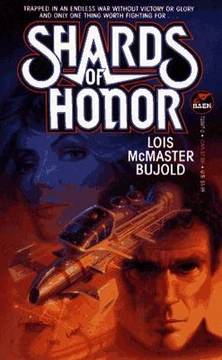
The intersection of Betan and Barrayaran identities produces some of the saga's most compelling characters. Cordelia Naismith, a Betan former ship captain, enters Barrayaran society and becomes central to its political and military narratives, appearing across multiple novels including Shards of Honor, Barrayar, and Gentleman Jole and the Red Queen. Her Betan background, rooted in an egalitarian and technology-rich culture, places her in constant negotiation with Barrayar's hierarchical aristocratic world. Miles Vorkosigan, the protagonist of most of the series, embodies this cultural duality as the son of a Betan mother and a Barrayaran aristocrat father. His physical disability, his clone brother Mark, and cousin Ivan Vorpatril further complicate questions of identity and belonging. The saga uses these mixed-heritage figures to explore how a person shaped by two fundamentally different societies navigates loyalty, duty, and selfhood.
Technological Landscape
The Beta Colony's identity as a technology-rich society is reflected in the advanced tools and systems that define daily life across galactic civilization. In most societies featured in the series, paper has been largely supplanted by plastic sheets or electronic devices, and flat video displays give way to three-dimensional holograms. Characters routinely interact with portable computers called wristconsoles and personal units known as comconsoles. Gravity manipulation appears both in artificially generated ship environments and in suppressed-gravity ground transport, with novels like Falling Free and Diplomatic Immunity specifically exploring the cultural friction between a society adapted to weightlessness and one that depends on gravity. Biomedical advances, including cloning, artificial wombs termed uterine replicators, and cryochambers for preserving the recently deceased, feature heavily throughout the series. Bujold also presents technological obsolescence as a deeply personal crisis, as characters with obsolete navigational implants or genetically engineered traits find themselves psychologically stranded when the programs that defined them are terminated.
Galactic Context & Colonial Heritage
The Beta Colony exists within a vast galactic civilization in which humanity has colonized dozens of planets over a span of at least four hundred to six hundred years, with no competing intelligent species encountered. Interstellar travel depends on spatial anomalies called wormholes that create tunnels through five-dimensional space, typically bracketed by military or commercial space stations serving as jump ports. These stations may be owned by planetary governments, commercial organizations, or operate independently. The political landscape is remarkably varied: some worlds practice corporate democracy, others are governed by criminal corporations, monarchies, empires, or direct democracies. Both Cetaganda and Barrayar have built empires by conquering neighboring planets through adjacent wormholes. Exploration and colonization continue to be active pursuits, with the planet Sergyar representing a notable ongoing effort. The Beta Colony's egalitarian, technology-rich character positions it as one thread in this richly woven tapestry of divergent human cultures spread across the galaxy.
Frequently Asked Questions
What is a Beta in the Vorkosigan Saga?
A Beta is a person born with a genetic neural condition that severs the motor pathway to the hands, making all coordinated fine-motor movement impossible. Cognition, speech, emotion, and creative thought remain completely intact; only the physical bridge between intention and hand-action is absent.
Can a Beta still think, speak, and create?
Absolutely. A Beta can compose an entire symphony in their mind, debate philosophy at length, and experience every human emotion with full depth. The limitation is strictly physical: they cannot pick up a pen, turn a key, or feed themselves without another person's help.
How does Barrayaran society treat Betas?
Barrayar views the condition as a deep social stigma, and Betas are frequently relegated to custodial institutions or kept under round-the-clock care. The shame often extends to the Beta's family, compounding the personal isolation of being unable to perform basic self-sufficiency in a culture that prizes physical competence.
Who is the most prominent Beta in the series?
Miles Vorkosigan, the protagonist of the majority of the novels, was born a Beta and spends his life navigating a warrior society that expects a dexterity he will never possess. His arc is the saga's sustained examination of identity, agency, and worth when the body denies a person a fundamental tool of action.
Is there a cure for the Beta condition in-universe?
No. The condition is permanent, genetic, and no work in Bujold's canon offers a medical fix or technological workaround. Characters and their communities simply adapt, and the narrative treats the condition as an unchangeable part of who the person is rather than a defect to be repaired.
More in Powers & Artifacts
Elsewhere in the Vorkosigan Saga universe
Spotted an error? Know more?
This is a living reference — every entry is fact-audited, and reader corrections feed straight into our audit queue. Suggest an edit · See this site's audit record